Most Scale.gg reviews grade it as a generic business suite. This one doesn’t. We graded Scale Plus the way a marketer actually uses it — launching a campaign in the morning, wiring the funnel and follow-up by lunch, and delivering for a client by Friday — across all 29 apps.
The quick verdict for marketers
Scale.gg earns its keep when your bottleneck is tool-switching, not features. Any single app in the suite has a deeper specialist rival — but no specialist rival runs your page, funnel, email sequence, course, community, and client delivery off one contact list and one bill. If you market every week, that consolidation is the feature.
01Why this review is different
Our main Scale.gg review covers the platform end to end — setup, the company behind it (Scale Plus by Monarch Labs, LLC), and the full feature tour. Our 7-login audit counted what the average marketer’s stack really costs in separate subscriptions and sign-ins. This page takes the next step: it assumes you already know what Scale.gg is, and asks the only question that matters to a working marketer — does it run a campaign week better than the stack you have now?
So everything below is organized by workflow, not by feature list. Campaigns, funnels, email, content, clients. If a tool in the suite doesn’t move one of those five jobs forward, we don’t pretend it does. And where Scale.gg is not the right tool — dedicated ad tracking is the big one — we say so and point you at what we use instead, like RedTrack.
The one-sentence case
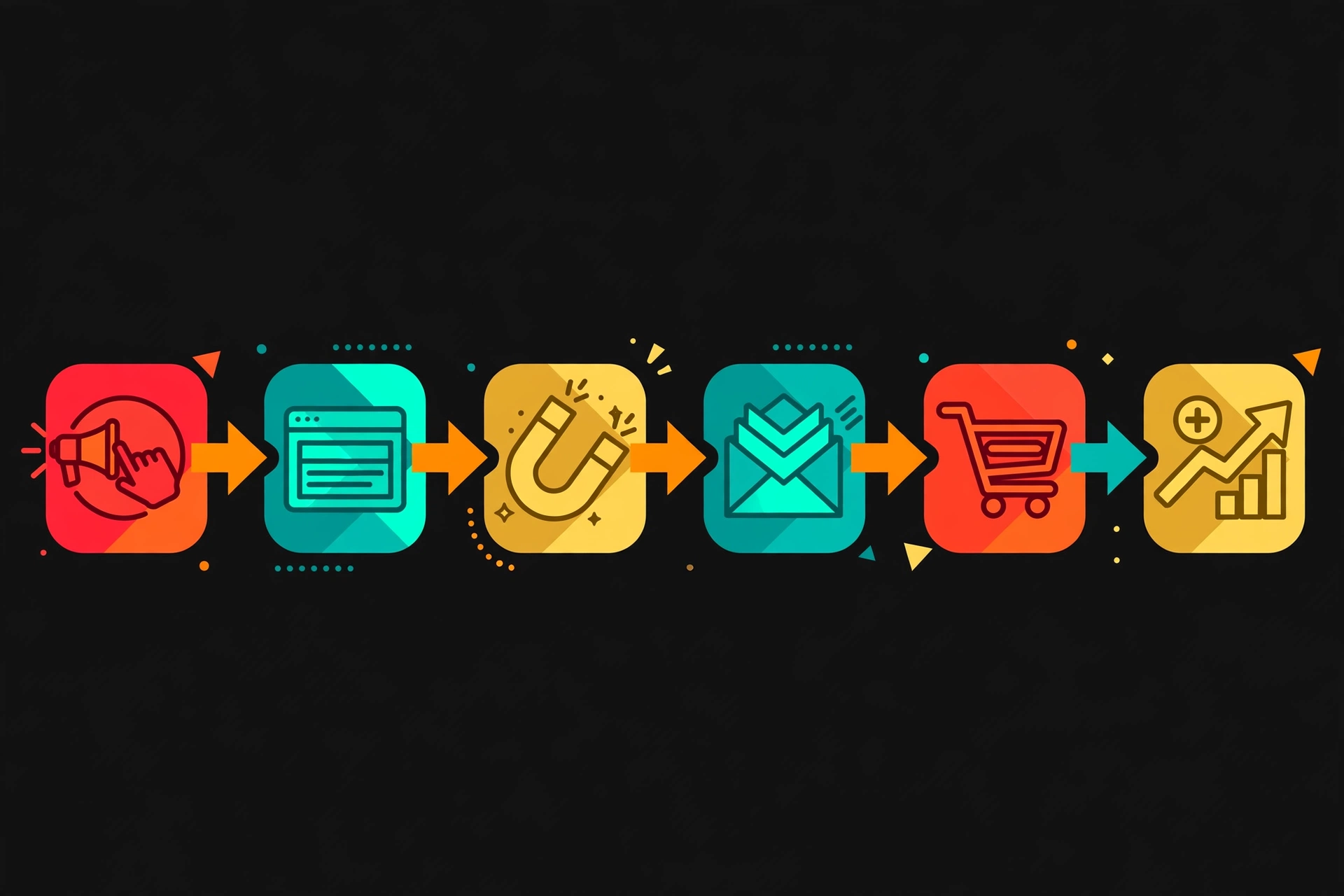
A marketer’s week is a chain — traffic → page → funnel → email → sale → delivery → report — and every link in that chain that lives in a different tool costs you an export, a Zap, or a login. Scale.gg’s 29 apps put the whole chain in one place. That’s the review; the rest is evidence.
02The 29 apps, translated into marketer jobs
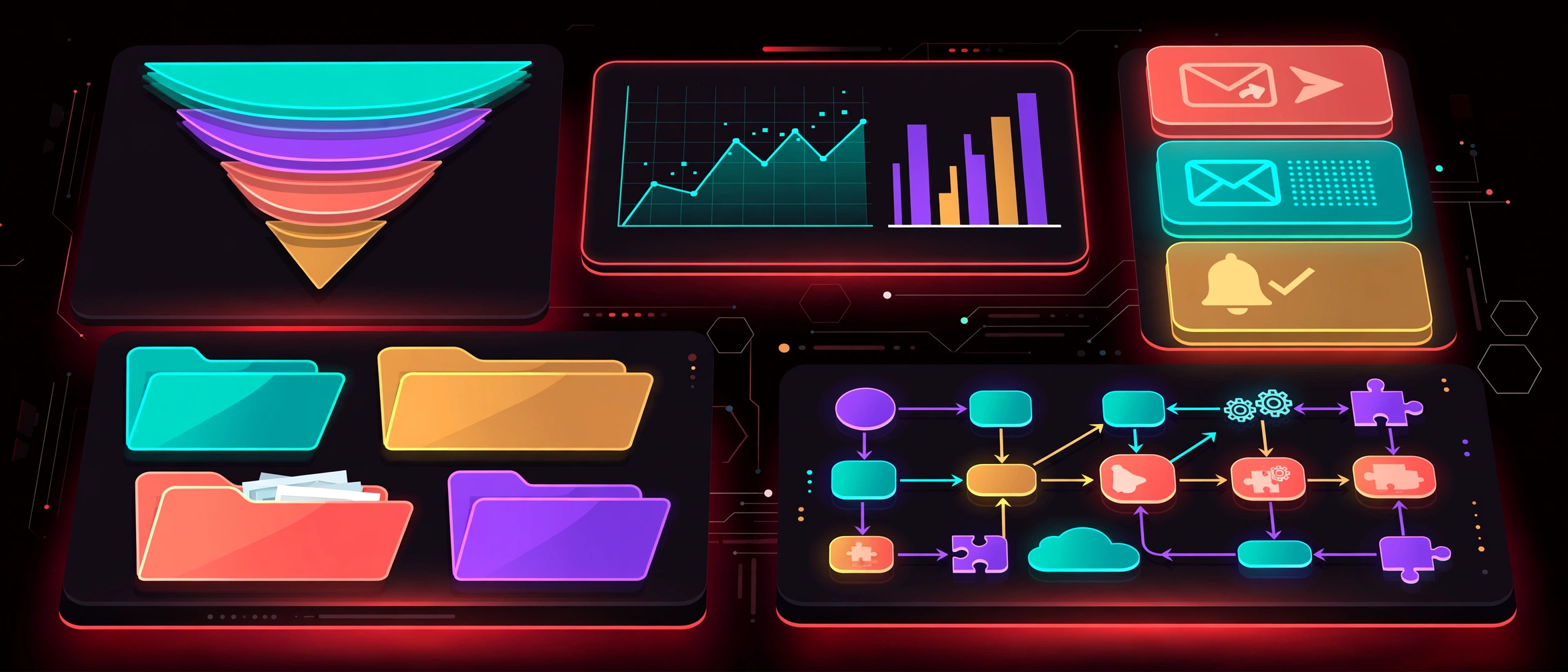
“29 apps” is a brochure number. What matters is which of your jobs they cover. Grouped the way marketers actually think about them, the Scale Plus suite breaks into six job clusters:
Capture: funnels & pages
Website and funnel builders, landing pages, forms, and surveys — the front door of every campaign, built without a developer or a separate page tool.
Follow up: email & automation
Email campaigns, autoresponder sequences, and workflow automations that fire off funnel actions — so a new lead is never sitting in a spreadsheet overnight.
Manage: CRM & pipelines
Contacts, pipelines, and calendars in the same account as your funnels — a lead’s page view, email opens, and booking sit on one record.
Teach: courses, webinars & video
Course and membership delivery plus webinar and video tools — the lead-magnet webinar and the paid course live where the funnel that sold them lives.
Retain: community & social
Community spaces and content/social tools that keep buyers and audiences warm between launches — retention without renting another platform.
Measure: checkout & reporting
E-commerce, payments, and reporting close the loop: the checkout that takes the money and the numbers that tell you which campaign earned it.
The honest caveat: breadth is the product here. A dedicated email platform will out-feature the email app; a dedicated course platform will out-polish the course app. What none of them do is share one contact database with your funnel. For a marketer running the whole chain solo or with a small team, that trade is usually worth it — and it’s the same consolidation logic we lay out across every tool category in our affiliate marketing software guide.
03Five workflows, start to finish
This is the table we wish every review published: the five jobs a marketer repeats every week, and exactly how Scale.gg handles each one end to end.
| Workflow | Apps used | How it runs in Scale.gg | Why it matters |
|---|---|---|---|
| Campaign launch | Pages, forms, CRM | Clone last launch’s page, swap the offer, point your traffic at it. Leads land straight in the CRM — no CSV export, no integration to babysit. | Launch day is editing, not plumbing. |
| Funnel build | Funnels, checkout, email | Opt-in page → sales page → checkout → upsell, with the follow-up sequence attached to the funnel itself, so abandoners get emailed automatically. | One build carries the whole revenue chain. |
| Email follow-up | Email, automation, CRM | Sequences trigger off real behavior — opted in, watched the webinar, bought, didn’t buy — because the email app can see the funnel and course data. | Follow-up that reacts instead of blasting. |
| Content engine | Courses, webinars, community, social | This week’s webinar becomes next week’s lead magnet, the replay feeds the community, and the course upsell sits one click behind both. | Every asset feeds the next campaign. |
| Client delivery | All of the above, per client | Run the client’s funnel, email, and content from the same workspace pattern you use for your own offers, and hand over reporting from the same data. | Onboarding = duplicating a proven setup. |
04What actually converts
Tools don’t convert — offers and follow-up do. But the platform decides how much friction sits between the two. In marketer terms, these are the five places Scale.gg removes friction that costs real sales:
Speed from idea to live page
A campaign idea at 9am can be a live landing page by 10am — no ticket to a developer, no waiting on a page-tool subscription to renew.
Follow-up with zero gaps
Because the email app sees the funnel, a lead who abandons a checkout gets the recovery sequence automatically — not after someone notices a gap in a sync log.
One contact record
Page views, email opens, webinar attendance, and purchases live on one record, so your segmentation is behavior, not guesswork.
Delivery that keeps selling
The course, community, and next offer live where the funnel sold them, so a buyer’s next step is one click away instead of a new login somewhere else.
Cleaner attribution habits
Scale.gg doesn’t replace a tracker — pair it with RedTrack for click-level truth (see our RedTrack review) and let Scale’s own reporting handle the inside-the-funnel view.

The honest limit
Consolidation helps the chain, not the offer. If the offer is weak or the traffic is wrong, no suite saves it — and Scale.gg’s own reporting will not tell you which ad made the sale the way a dedicated tracker will. That is why lever 5 matters: pair the platform with real attribution instead of pretending one dashboard does both jobs.
05Agency & client use

For freelancers and small agencies, the pitch is simple: stop rebuilding a stack per client. In a patchwork setup, every new client means a new page tool account, a new email account, a new course platform — and a new set of logins to hand over (or lose) when the engagement ends. Our 7-login audit showed how fast that sprawl compounds.
On Scale.gg’s upper tiers, the pattern that works is templating your own best campaign — the funnel, the follow-up sequence, the delivery flow — and cloning it per client. The client gets a professional, connected setup on day one; you get a delivery process you can actually repeat and price. Where the suite is thinner than a specialist agency tool, it’s in deep per-client white-labeling and granular team permissions — if you run a large team with strict client separation, weigh that carefully against the comparison in our Scale.gg vs. GoHighLevel comparison before you commit.
06Pricing for marketers
Scale Plus pricing, as published by Monarch Labs, LLC — judge it against what it replaces: add up your current page builder, email platform, course host, community tool, and scheduler, then compare with one line below.
How a marketer should read this pricing
Solo ($395/yr) and Starter ($495/yr) are the solo-operator play: one business, one stack, less than most email tools alone charge per year. Pro ($95/mo or $795/yr) is the working marketer’s tier — annual billing saves $345 against paying monthly. Pro Max ($200/mo or $1,495/yr) only makes sense when client work or multiple brands are paying the bill. Every paid plan carries a 30-day money-back guarantee, so the annual plans are the low-risk way in. Full tier-by-tier feature breakdowns live in our main Scale.gg review.
07Scale.gg vs. GoHighLevel vs. a patchwork stack
| Question | Scale.gg (Scale Plus) | GoHighLevel | Patchwork stack |
|---|---|---|---|
| Core idea | 29 apps, one flat suite, one login | CRM-first platform built around agency sub-accounts | Best-of-breed tool for every job |
| Best for | Marketers running campaigns, content & offers end to end | Agencies whose core product is client CRM management | Specialists who need one job done at maximum depth |
| Billing | From $395/yr (Solo) to $200/mo (Pro Max) | Monthly per-account pricing via gohighlevel.com | Five to seven subscriptions, all renewing on different days |
| Weak spot | Individual apps are less deep than specialists | Broader than many solo marketers need; CRM-centric | Integration gaps, exports, and login sprawl |
We go ten rounds deep on this matchup — pricing, AI tooling, and who wins each category — in the full Scale.gg vs. GoHighLevel comparison. And again, for the record: The Affiliate Hustle has no affiliate relationship with GoHighLevel; it appears here purely because marketers ask about it. If your real alternative is “keep my current tools,” our affiliate marketing software guide maps the whole category so you can price the patchwork honestly.
08Pros & cons — the marketer’s cut
What marketers gain
- One login for the whole campaign chain — pages, funnels, email, courses, community, and checkout share one contact base.
- Follow-up that can’t silently break — sequences trigger off funnel and course behavior because it’s all one system.
- Real money saved vs. a stack — Solo at $395/yr undercuts a single mid-tier email subscription, before you count the other 28 apps.
- Clone-and-launch speed — proven funnels and client setups duplicate instead of being rebuilt.
- 30-day money-back guarantee on paid plans makes the annual tiers a low-risk trial.
What marketers give up
- Specialist depth — a dedicated email or course platform still wins on its home turf, feature for feature.
- Not an ad tracker — paid-media attribution still needs a dedicated tool like RedTrack alongside it.
- Migration is a project — moving funnels, lists, and courses from an existing stack takes a weekend, not an afternoon.
- All-in-one risk — consolidating means one platform’s roadmap and uptime carry your whole operation.
- Top tier needs client revenue to justify it — Pro Max at $200/mo is an agency line item, not a hobbyist one.
09Who should (and shouldn’t) switch
Switch if you are…
- An affiliate or offer marketer paying for 4+ separate tools that mostly serve one funnel
- A creator whose course, community, and email list live on three platforms
- A freelancer or small agency cloning similar campaign setups across clients
- Anyone whose follow-up has ever broken because two tools stopped syncing
Stay put if you are…
- A specialist who truly needs best-in-class depth in one category (e.g., enterprise email deliverability tooling)
- A media buyer whose stack is tracker-first and whose pages live elsewhere by design
- A large agency needing strict per-client white-labeling and granular team permissions above all else
- Happy with your current stack’s total bill — consolidation only pays when the stack costs real money
Final verdict: built for the way marketers actually work
Graded as a business suite, Scale.gg is a solid all-in-one. Graded as a marketer’s operating system — campaign in, funnel wired, follow-up automatic, client delivered, all before the week ends — it’s one of the strongest value plays in the category, with a 30-day guarantee behind the annual plans. Start with our full review for the complete feature and setup breakdown.
10Scale.gg for marketers — FAQ
Is Scale.gg good for affiliate marketers specifically?
Yes — for marketers whose day is campaigns, funnels, email follow-up, and content, Scale.gg’s value is consolidation. Instead of separate subscriptions for pages, email, courses, communities, and client delivery, the 29 Scale Plus apps sit under one login and one bill, so a campaign can go from landing page to checkout to follow-up sequence without exporting lists between tools.
How much does Scale.gg cost?
Scale Plus pricing: Free is $0. Solo is $395/yr, Starter is $495/yr, Pro is $95/mo or $795/yr, and Pro Max is $200/mo or $1,495/yr. Annual billing on Pro and Pro Max works out well below paying month to month, and every paid plan carries a 30-day money-back guarantee.
What are the 29 apps in Scale Plus?
The 29 apps cover the full marketer stack: websites and funnels, email marketing and automation, CRM and pipelines, courses and memberships, communities, webinars and video, calendars and booking, e-commerce and payments, social and content tools, forms and surveys, and reporting. The point is not any single app — it’s that they share one account, one contact base, and one login.
Can agencies use Scale.gg for client work?
Yes. The higher tiers are the natural fit for agencies and freelancers running multiple campaigns or clients, because funnels, email, content, and delivery live in one place instead of a different tool stack per client. Start a client on the same workflow template you use for your own campaigns, and onboarding becomes duplication instead of a rebuild.
How does Scale.gg compare to GoHighLevel for marketers?
Both are all-in-one platforms, but they come at marketers from different angles. GoHighLevel is CRM-and-agency first, with per-client sub-accounts at its core. Scale.gg (Scale Plus) is suite first — 29 apps under one flat plan — which suits marketers who want the whole campaign stack in one subscription. The Affiliate Hustle has no affiliate relationship with GoHighLevel. See the full head-to-head comparison.
Does Scale.gg replace my ad tracker?
No. Scale.gg runs your pages, funnels, email, and delivery, but serious paid-media and affiliate tracking still belongs in a dedicated tracker. That’s why our own stack pairs a platform like Scale with RedTrack for click and conversion attribution across campaigns — details in our RedTrack review.
Is there a money-back guarantee?
Yes. Scale Plus paid plans come with a 30-day money-back guarantee, which makes the annual plans — Solo at $395/yr and Starter at $495/yr especially — a low-risk way to test whether consolidating your stack actually saves you money and logins.
Sources
- Scale Plus product and pricing details (29 apps; Free $0; Solo $395/yr; Starter $495/yr; Pro $95/mo or $795/yr; Pro Max $200/mo or $1,495/yr; 30-day money-back guarantee), Scale Plus by Monarch Labs, LLC, Boca Raton, FL — as tested and documented in The Affiliate Hustle’s Scale.gg review.
- Stack-cost and login-sprawl findings: The 7-Login Audit: How Solo Marketers Lose Their Best Work Hours Before 9 AM – Affiliate Hustle — The Affiliate Hustle.
- Head-to-head platform data: Scale.gg vs. GoHighLevel Compared — The Affiliate Hustle.
- Category and tool-stack context: Affiliate Marketing Software Guide — The Affiliate Hustle.
- Tracking companion referenced for attribution: RedTrack Review (2026): The Ad Tracker You Must Have to Know What’s Converting — The Affiliate Hustle; GoHighLevel product information: gohighlevel.com (no affiliate relationship).
More From The Affiliate Hustle
- How CPA Affiliate Networks Work
- Best Affiliate Networks for Beginners
- Affiliate Marketing Software Guide
- DraftKings vs FanDuel Casino PA (2026): Games, App, Payouts & Player Experience Compared
- Best Online Casinos in Pennsylvania
- How to Get Approved by CPA Networks
- MaxBounty Review (2026): The CPA Network With the Highest-Converting Offers
- RedTrack Review (2026): The Ad Tracker You Must Have to Know What’s Converting
- MaxBounty vs ClickBank Compared (2026): Payouts, Approval, Offers & Which Pays More
- Scale.gg vs GoHighLevel Compared (2026): Agent-Native Apps vs the Agency CRM






Leave a Reply